

A field guide to retainers, projects, equity, and getting paid
The most common DM I get from new fractional operators is some version of the same question: how much should I charge? Monthly or by project? Is equity crazy to ask for? What happens when the scope balloons?
I get this every week from GTM Operators making the jump but never from the experienced ones. They learned the lesson the hard way. The newer ones are guessing, or asking three friends and averaging the answers.
Most fractional operators undercharge and structure their deals poorly.
Three Questions to Answer Before You Talk to Anyone
Before money comes up with a client, answer these for yourself.
Who are you and what is your real market value?
If you ran a $50M revenue org as a CRO, you don't get the same rate as someone two years out of an AE seat. Your background sets the floor, so be honest about it.
What does the client actually need?
An advisory monthly call is not the same as showing up Tuesday and Thursday running forecasts. Giving advice is not the same as getting your hands dirty and being the CRO, and those aren't priced the same.
How do you want to live?
The number of seats you can hold and the value you are driving dictates the rate you need each one to pay.
If you can't answer those three questions before you walk into a room, you're not ready to send a proposal.
The 4 Engagement Models (and Where Each One Wins)
Most fractional engagements fall into one of four structures. Each one solves a different problem and breaks in a different way.

#1 | The Monthly Retainer
The monthly retainer is the workhorse for in-seat fractional work. The client pays a flat fee every month for an agreed amount of capacity, one day a week, two days, three. Predictable for them, predictable for you. The problem to watch out for is scope creep. Without a written engagement charter on day one, the retainer becomes "do whatever we ask" and the day count is fiction within 60 days. Make sure you nail this - verbally and in writing. Do NOT assume you are on the same page.
#2 | Scoped Project Work
Scoped project work is fixed deliverables, fixed price, fixed timeline. To me this is the definition of a “Consultant.” Build the playbook by July 15. Run a 90-day discovery overhaul. The client knows what they're buying, and you can charge for the outcome rather than hours. It's a good structure for a first engagement because trust gets built around a clear win.
#3 | Equity (or Part-Equity)
Equity, or part-equity, is the pitch you'll hear most often from early-stage founders who want help without the cash burn. The appeal is riches beyond your wildest dreams. If the company wins, you win. The problem is that most early-stage companies don't exit. Equity is a lottery ticket and you're working real days for it. Do NOT fall for this. (If you get the one in a million unicorns ignore me). Treat it as a bonus layered on top of cash, not a substitute. And if you do take part-equity, evaluate the company the way an investor would. Are the founders coachable? Is the market real? Is there enough runway to get somewhere worth going?

#4 | The Hybrid
The hybrid is what I run with my clients where I believe in the company’s growth prospects. A base retainer plus equity or a performance kicker tied to an agreed outcome. You get paid to show up and do the work and get paid more when you win. The alignment is real. But, be careful to only agree to the kicker when it is something you can control. Tying your upside to something you have no influence over is a great way to feel cheated. Tie it to what you actually own.
Setting the Number
In order to set your number properly, you need confidence in yourself. If you don’t have it, address that first.
Before you walk into any pricing conversation, know your floor and commit to it. The client who tries to move you below it will try to move you below everything else later. Walk away. There will be another one.
Anchor on the value, not the hours. A real fractional CRO in seat is worth $10K to $25K a month for a SaaS company doing $5M to $50M in ARR. That's the market. The moment you start pricing by the hour, you get treated like a contractor. Don’t do it.
Charge for everything. Your diagnostic of their GTM organization has real value, don’t give it away. Bake it into the rate or charge a separate kickoff fee.
Here is how you determine whether you are the $10K a month person or the $25K a month person; If you don’t already know if you are the $25K a month person, you aren’t. To determine if you are $10K, $15K or $20K, ask around - reach out to friends and colleagues and ask what they charge. If you are going to be in this game you need a network to rely on. This is where Pavilion comes in.

Patterns That Should Make You Pause
A few patterns I've watched burn operators repeatedly. The founder who opens with "let's see if it works for 30 days" doesn't believe in the engagement enough to commit to it, which means you probably shouldn't either. The client who pushes hard on rate before asking a single question about scope or outcome is buying on price, and the moment you slow down they'll find someone cheaper. The company asking you to take 50% of your fee in equity at a $40M valuation deserves a polite decline. And the founder who burned through five senior revenue leaders in three years and says it was all their fault? Don't walk. Run.
The Last Thing
The number you charge is information. It tells the client what kind of operator they're getting, tells you whether the relationship is going to work, and tells the market what your work is worth.
I've watched good operators undercharge for years because of a lack of confidence. The clients didn't love them more for it. They respected the operators who knew their value and held it.
Price is part of your brand. Build it with clarity, without apology, and with the willingness to walk when the deal isn't right.
Meet Neil...
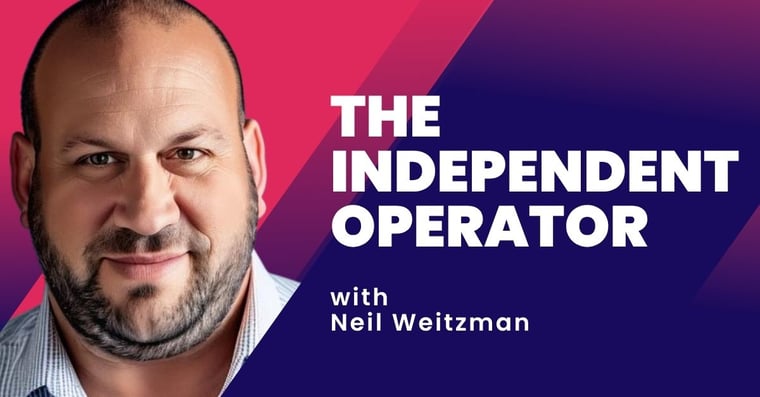
Neil Weitzman is a longtime Pavilion Ambassador and the co-leader of our CAF (Consultant, Advisor, Fractional) sub-community. A seasoned fractional CRO and GTM operator. Neil brings tactical wisdom and unfiltered insights to help independent executives thrive. This article is part of The Independent Operator, Neil’s ongoing series for Pavilion.
Connect with Neil on LinkedIn | Linktree | Follow his GTM or GTMFO Substack or learn more at weitzmangtm.com